Navigating the New Digital SAT: Tips and Strategies for Success

The Scholastic Assessment Test (SAT) has recently undergone significant changes, making it more relevant and accessible to today’s students. One of the most significant transformations is the shift to a digital format. In this blog post, we will explore the key aspects of the new digital SAT and provide valuable tips and strategies to help students prepare effectively.

The Digital SAT:

  • Familiarity with the Testing Application:
    • Be familiar with the testing application. Understand how to navigate through the test, use the digital tools, and manage time effectively.
  • Question Format:
    • The new SAT features shorter passages, with each passage accompanied by one question.
    • There are 27 questions per module in Reading and Writing (54 total).
    • Students have more time per question.
  • More Time:
    • Students have 32 minutes to complete each Reading and Writing module (64 minutes in total) and 35 minutes for each Math module (70 minutes total).
    • This comes to about 1.19 minutes per reading and writing question and 1.59 minutes per math question.
  • Shorter Test Duration:
    • The new digital SAT is shorter–two hours and 14 minutes instead of the previous three hours.
  • Multistage Adaptive Testing:
    • In the first module of each section (Reading/Writing or Math), students are presented with a mix of easy, medium, and difficult questions.
    • In the second module, the computer adapts to the student’s performance level, providing questions that are either easier or harder based on their initial responses.
  • Combined Reading and Writing Sections:
    • The Reading and Writing sections from the traditional SAT have been combined into two modules, although they test the same content as before.

Essay Section (Optional):

  • While some students choose to complete the optional essay section, it is only necessary if their desired colleges require or recommend it.

Preparing for the SAT:

  • Review basic grammar components:
    • Comma usage
    • Subject-verb agreement
    • Commonly confused words
    • Pronouns.
  • For multiple-choice questions, the process of elimination can be a valuable strategy.
    • Eliminate clearly wrong answer choices first.
    • Then eliminate half-truths, hyperboles, and incorrect assumptions.
  • Time management is crucial.
    • Do not to spend excessive time on the toughest questions.
    • Make educated guesses on questions they are unsure about.
  • Pay attention to detail and avoid jumping to conclusions when reading questions and passages.

Common Mistakes to Avoid:

  • Be vigilant for common mistakes the SAT tests:
    • Effect   vs affect
    • A lot   vs allot   vs a lot
    • into (movement)   vs in to (I came in to get a drink)
    • then (shift in time) vs   than (comparison)
    • assure (promise)  vs insure (protect risk)  vs ensure (to make certain)
    • less (can’t count)  vs fewer (can count)
    • between (two things, clearly separated)  vs among (several things, not clearly separated)
    • me (you are the object receiving the action–“Please contact me”) vs myself (reflexive pronoun—“I hit myself”)
  • Familiarize yourself with prefixes that can help you understand unfamiliar words in context:
    • omni – all – omnipotent, omnipresent, omnivore
    • inter – between – intercede, interfere, interject
    • intra – within – intrapersonal, intramural
    • mal – bad – maladjusted, malign
    • ben – good – benevolent, benefit
    • grat – pleasing – gratify, gratuity
    • sub – below – subzero, substitute, subordinate
    • re – again – realign, readjust
    • retro – back – retroact (act backward)
    • se – apart – secession (withdraw from assoc.), secret (kept apart/hidden), select (choose one, set apart)
    • dys – bad/abnormal – dystopia, dysfunction
    • sym – together – symbol (bring meanings together)
    • super – above – supersede (take the place of previous supervisor), superfluous (more than needed)
  • Practice is the most effective preparation strategy. Regularly practicing with official SAT materials and sample tests can build confidence and familiarity with the format.

The new digital SAT offers students a more user-friendly and relevant testing experience. By understanding the test’s format, practicing effectively, and applying essential strategies, students can approach the SAT with confidence and increase their chances of success. Preparing for this important exam is about more than just memorizing facts—it’s about mastering the skills needed for academic and professional success.


Read Well to Write Well: Strategies for Reading Comprehension

For a man to write well, there are required three necessaries—to read the best authors, observe the best speakers, and much exercise of his own style…It is fit for the beginner and learner to study others and the best. For the mind and memory are more sharply exercised in comprehending another man’s things than our own.

~Ben Jonson

The English playwright and poet Ben Jonson knew what it takes to succeed in writing: read, observe, and exercise. In other words, it is important to observe the work of others and practice often. If you can understand what you read, then you will be able to:

  • Use the knowledge you have gained to support your own ideas
  • Apply the structure and style that others use to your own writing.

But understanding what you read, or reading comprehension, takes practice and intention. Before reading a text, it will help if you set a purpose. Take a look at the reading and ask yourself the following:

  • What is the topic of the text?
  • When was it written?
  • What issue(s) will be addressed?
  • What conclusion(s) might the author reach about the issue(s)?

Then, as you read the text, consider these questions:

  • What reasons does the author give for their statements or belief?
  • Is the author using facts or opinions?
  • Has the author used neutral or emotive words?
  • What seems to be the writer’s position?
  • What assumptions does the writer make?

Finally, when you have finished the reading, answer these questions:

  • What does the author leave out?
  • Whose perspectives, experiences, or attitudes are not considered?
  • Do you accept the arguments made by the author? Why or why not?

Setting a purpose will help you become a better reader, and being a better reader will improve your writing. By asking yourself the above questions, you improve your close reading skills. While speed is important when reading, comprehension is more essential to being a good reader. Strong reading comprehension requires close reading and a critical eye. Close-reading is a thoughtful, critical analysis of a text, which focuses on both structure and meaning to develop a deep, precise understanding.

To help you improve your engagement with a text, you might consider making a few notes as you read:

  • Notes to explain meaning
  • Synonyms for unfamiliar words
  • Challenges to opinions that are expressed
  • Examples to support points that are made
  • Connections of your own experiences or wider knowledge
  • Questions about the text

By enhancing your reading skills, you will also greatly improve your writing ability. So, if you aspire to be an excellent write, don’t forget to pick up a book!

Source: Pavich, Jill. Cambridge International AS Level: General Paper Coursebook

IGCSE First Language English Paper 2: Narrative Writing

The Cambridge IGCSE First Language English Paper 2 is title Directed Writing and Composition. Section A tests both reading and writing skills. You can check out our previous post on genres to learn more about that. Section B, though, tests only the student’s writing skills.

Section B of Paper 2 gives the student four options to choose from: two descriptive prompts and two narrative prompts. Our last post covered descriptive writing. This post will look at the narrative writing.

Below are sample narrative prompts:

  • Write a story that ends with the phrase ‘he couldn’t believe his eyes’.
    Write a story where one of the characters becomes ill.
  • Write a story that involves solving a problem.
  • Write a story which includes the words, ‘… this could not be the present …’.
  • Write a story with the title, ‘Visitors’.
  • Write a story which involves a mistake in the sending or receiving of a message.

Mark Scheme

24 marks are given for style and accuracy: Precise, well-chosen vocabulary and varied sentence structures, chosen for effect; consistent well-chosen register suitable for the context; spelling, punctuation, and grammar almost always accurate.

16 marks are given for content and structure: The plot is well-defined and strongly developed with features of fiction writing such as description characterization and effective climax and convincing details.

Tips, Practice, and Feedback

If you would like individualized, daily instruction to help prepare for the IGCSE English or AS English exams, Mr. Lux is a trained Cambridge teacher who can help you. Mr. Lux can provide tips, practice, and feedback as you prepare for your exams.

For $95 USD a month, you receive daily communication with a trained Cambridge teacher who has more than 10 years of teaching experience. Visit the About and Enrollment pages for more information. You can also learn more about what Lux Writing Center offers through other posts.

IGCSE First Language English Paper 2: Descriptive Writing

The Cambridge IGCSE First Language English Paper 2 is title Directed Writing and Composition. Section A tests both reading and writing skills. You can check out our previous post on genres to learn more about that. Section B, though, tests only the student’s writing skills.

Section B of Paper 2 gives the student four options to choose from: two descriptive prompts and two narrative prompts. This post will give some suggestions for succeeding in the descriptive writing.

Below are sample descriptive prompts:

  • Write a description with the title ‘The playground.’
  • Write a description with the title, ‘The factory’.
  • Write a description of a place where animals are kept in captivity, such as a zoo, wildlife park or
    sea-life centre.
  • Describe the inside of an interesting shop.
  • Describe waking up to find the scene around you has changed.
  • Describe a group of tourists outside an attraction.

Mark Scheme

24 marks are given for style and accuracy: Precise, well-chosen vocabulary and varied sentence structures, chosen for effect; consistent well-chosen register suitable for the context; spelling, punctuation, and grammar almost always accurate.

16 marks are given for content and structure: Many well-defined and developed ideas and images create a convincing overall picture with varieties of focus.

Tips, Practice, and Feedback

If you would like individualized, daily instruction to help prepare for the IGCSE English or AS English exams, Mr. Lux is a trained Cambridge teacher who can help you. Mr. Lux can provide tips, practice, and feedback as you prepare for your exams.

For $95 USD a month, you receive daily communication with a trained Cambridge teacher who has more than 10 years of teaching experience. Visit the About and Enrollment pages for more information. You can also learn more about what Lux Writing Center offers through other posts.

Cambridge IGCSE First Language English Text Types

The Cambridge IGCSE First Language English Papers 1 and 2 require students to write in various genres, or text types. These include Newspaper report, Magazine article, Journal, Interview, Speech, and Formal letter. Below are some suggestions to help students improve their writing for these exams.

NEWSPAPER REPORT

Language features to keep in mind:

  • Five W’s: Who, What, When, Where, Why
  • Third Person
  • Past tense (usually)
  • Direct Speech: speech reproduced exactly as it was spoken, in inverted commas
  • Reported Speech: He told us not to do that.

Format:

Unlike other accounts of events, which are usually chronological, news reports generally follow this order:

  1. Summary of recent event
  2. Background to event
  3. Return to immediate situation
  4. Response of those involved
  5. Look ahead to near future

Some suggestions:

  • Include a headline, a summary of the report in note form
  • Make your headline short
  • The first sentence should sum up the story
  • Write in 3rd person, past tense
  • Break it up into short paragraphs
  • Use both direct and reported speech
  • Be objective and formal
  • Keep opinions and personal reactions out
    • It is known, Was reportedly, It was reported, It is also believed, According to, It is thought

Tips, Practice, and Feedback

If you would like to explore the other genres or text types, Mr. Lux offers individualized, daily instruction to help prepare for the IGCSE English or AS English exams. Mr. Lux is a trained Cambridge teacher who can help you by providing tips, practice, and feedback as you prepare for your exams.

For $95 USD a month, you receive daily communication with a trained Cambridge teacher who has more than 10 years of teaching experience. Visit the About and Enrollment pages for more information. You can also learn more about what Lux Writing Center offers through other posts.

Home for the Summer–now what do you do?

The summer is quickly approaching. The break is certainly something to look forward to, but let’s be honest: the pandemic continues and we have already spent a lot of time at home over the last year. Though watching television and playing video games are fun, there are so many things students could and should be doing to get a little variety in their day and to stay healthy.

Of course, this English teacher’s first suggestion is for you to write. That writing does not need to be more essays, though. You could write about what’s going on during this pandemic. What’s going on in the world, in your country, in your city, in your social circle, in your family, and within yourself.

In a podcast last year, author George Saunders asks, “Are you keeping records of the emails and texts you’re getting? The thoughts you’re having? The way your hearts and minds are reacting to this strange new way of life?” Students could use their downtime to keep up with such things through writing.

Saunders says, “It’s all important. Fifty years from now, people the age you are now won’t believe this ever happened. Or will do the sort of eye roll we all do when someone tells us about something crazy that happened in 1960.”

Writing is also a way to make sense of things that are scary, sad, difficult, or boring. In that same podcast, the host Cheryl Strayed says, “Writing is the way I make sense of almost everything in my life.” Through keeping a journal or emailing a friend or family member, young people can both keep “records” and “make sense” of all that is going on and how they are feeling.

But students can also take this time to read. Read something fun. Read something easy. Read blogs, magazines, history books, science articles, anything! Ebooks, digital magazines, and audiobooks are available online. Many books can be found online through sites like Project Gutenberg. Read something your teacher isn’t “making” you read.

Watch documentaries about topics that interest you. Plant some seeds in a pot and leave that pot in a place where you’ll see it often so you can really watch the plants grow. Draw or paint. Have a video call with a friend or group of friends to play a game “together.” Use an online program or a YouTube channel to learn a language.

Exercise. You don’t have to be at a soccer field, gym, or track to exercise. Do some stretches in the morning when you wake up. Do exercises that don’t require a lot of space, like pushups, sit-ups, and jumping jacks. A simple online search will provide you with yoga and martial arts instructors who provide free video lessons.

And, don’t forget to breathe! It’s great to take 3-5 minutes to sit quietly, relax, and breathe. You can do this by sitting in a quiet place with your eyes closed, focusing on each breath you take–in and out. Or search for free guided relaxation videos online.

Whatever you do, though, try hard to get along with those you live with. It’s easy to get irritable and frustrated with people we are with for long periods of time. Try to find your own space, give others their space, respect each other’s needs, and help out wherever you can to create a peaceful living situation.

Ideas for Writing in Nature

I sometimes suggest that young writers spend time sitting outside in a comfortable spot. While out there, I ask that they write down all that they experience: the smell of fallen leaves, the chirping of a bird, an ant crawling on the ground, or the feeling of the cool breeze. In itself, it is a productive activity for exploring sensory imagery and leisurely writing. Later, these notes might even evolve into a descriptive essay, a poem, or a short story.

allgau-63427_1280-1

The activity is fruitful, I believe, because of the depth and beauty the natural world offers us. When we, our students, or our children are facing writer’s block, boredom with the usual prompts, or simply a tiredness of being at the desk, outside is a good place to be.

Connecting our lives to the natural world around us is not a new concept. It is for good reason that we plant trees in street medians, spend Saturday afternoons at parks, stare out at the vastness of the ocean, and are overwhelmed when we look up at a starry night.

It’s an ancient connection that gets to our core of being. I see this connection in the readings I teach—creation stories, the Psalms, Indian animal fables, Jesus’ parables, and poetry from all over the world.

Thomas Merton, a writer and monk who lived in a hermitage in the woods of Kentucky, believed that creation must be experienced and observed. He began many of his journal entries by writing what he was observing in the forest around him. He wrote descriptions like this one:

Mists of damp heat rise up out of the fields around the sleeping abbey.  The whole valley is flooded with moonlight and I count the southern hills, and almost number the trees of the forest to the north.  Now the huge chorus of living beings rise up out of the world beneath my feet: life singing in the watercourses, throbbing in the creeks and the fields and the trees, choirs of millions of jumping and flying and creeping things.  And far above me the cool sky opens upon the frozen distance of the stars.

He did this as if he had to—as if these things had such an influence on his contemplative life and writing that he had to acknowledge them first.

Nature is a good place for a writer—young or experienced—to begin.  To get you started on your outdoor writing adventure, here are some ideas:

  1. Keep a nature journal.
  2. Sit outside away from people and do nothing. Write anything that comes to mind.
  3. Describe the smallest thing you can see outside. Do it with great detail.
  4. While on a hike, imagine a story that might take place in that setting.
  5. Personify an aspect of nature that you see.
  6. Spend 15 minutes outside observing the world around you. Write about what you notice most.
  7. Go out on a very cold or very hot day. You might be uncomfortable. Try to find the good in what you feel and experience.
  8. When you are outside, which of your senses are you most thankful to have?
  9. If you don’t like to be outside, write while you are outside and tell what you don’t like about it.
  10. Write about the element of nature that speaks to you most.
  11. Write a story or poem about a leaf falling.
  12. Describe what a bird might see.
  13. Read outside. Remember, the key to being good writer is to read.
  14. While inside, read about nature and look at pictures of nature. Let these images and readings inspire your writing. For example, browse through the bird images of Alexander Wilson, American Ornithologist. Tell what you see. Describe how the birds might feel if you touched them. Think of any movement the pictures might suggest.

The options are plentiful and nature is ready for you to experience it—so get outside and write!

NASA Inspired Writing

NASA’s entire collection of images, sounds, and video is available and publicly searchable online. You can use the media any way you like, for free.

Students and writers might look at pictures and videos just for fun, or the resources can inspire short descriptive writings, creative works of fiction, or poems.

Imagine you are describing how a constellation looks up close.

This NASA/ESA Hubble Space Telescope image shows the spiral galaxy NGC 4845, located over 65 million light-years away in the constellation of Virgo (The Virgin). The galaxy’s orientation clearly reveals the galaxy’s striking spiral structure: a flat and dust-mottled disc surrounding a bright galactic bulge. NGC 4845’s glowing centre hosts a gigantic version of a black hole, known as a supermassive black hole. The presence of a black hole in a distant galaxy like NGC 4845 can be inferred from its effect on the galaxy’s innermost stars; these stars experience a strong gravitational pull from the black hole and whizz around the galaxy’s centre much faster than otherwise. From investigating the motion of these central stars, astronomers can estimate the mass of the central black hole — for NGC 4845 this is estimated to be hundreds of thousands times heavier than the Sun. This same technique was also used to discover the supermassive black hole at the centre of our own Milky Way — Sagittarius A* — which hits some four million times the mass of the Sun (potw1340a). The galactic core of NGC 4845 is not just supermassive, but also super-hungry. In 2013 researchers were observing another galaxy when they noticed a violent flare at the centre of NGC 4845. The flare came from the central black hole tearing up and feeding off an object many times more massive than Jupiter. A brown dwarf or a large planet simply strayed too close and was devoured by the hungry core of NGC 4845.

Or you’re writing a fictional memoir of watching a launch based on a short video.

A SpaceX Falcon 9 rocket lifts off from Launch Complex 39A at NASA’s Kennedy Space Center in Florida at 10:30 a.m. EST on Jan. 19, 2020, carrying the Crew Dragon spacecraft on the company’s uncrewed In-Flight Abort Test. The flight test demonstrated the spacecraft’s escape capabilities in preparation for crewed flights to the International Space Station as part of the agency’s Commercial Crew Program.

Maybe you are writing a poem about a galaxy.

This image is from NASA Galaxy Evolution Explorer is an observation of the large galaxy in Andromeda, Messier 31. The Andromeda galaxy is the most massive in the local group of galaxies that includes our Milky Way.

Or you’re writing a work of fiction set on another planet.

Imagine standing on the surface of the exoplanet TRAPPIST-1f. This artist concept is one interpretation of what it could look like.

Perhaps a picture or video can help you describe what it feels like and sounds like to be on the moon.

AS16-113-18339 (21 April 1972) --- Astronaut John W. Young, commander of the Apollo 16 lunar landing mission, leaps from the lunar surface as he salutes the United States flag at the Descartes landing site during the first Apollo 16 extravehicular activity (EVA).  Astronaut Charles M. Duke Jr., lunar module pilot, took this picture. The Lunar Module (LM) "Orion" is on the left. The Lunar Roving Vehicle (LRV) is parked beside the LM. The object behind Young (in the shade of the LM) is the Far Ultraviolet Camera/Spectrograph (FUC/S). Stone Mountain dominates the background in this lunar scene. While astronauts Young and Duke descended in the LM to explore the Descartes highlands landing site on the moon, astronaut Thomas K. Mattingly II, command module pilot, remained with the Command and Service Modules (CSM) "Casper" in lunar orbit.

Even audio clips can enhance your descriptive writings and fiction. The site also provides potentially valuable resources for reports. The opportunities are vast, so check it out!

Compare and Contrast the News

Learning composition types doesn’t always have to be about writing essay after essay or filling out worksheets. Turning picture-based IKEA pictures into written instructions is a way to explore process writing, for example. When dealing with compare and contrast writing, thinking outside of the box can open the door to many possibilities that go beyond writing an essay.

This image has an empty alt attribute; its file name is pexels-photo-177557.jpeg

In this post, we’ll go over the components of compare and contrast writing, then we’ll look at different ways to organize a compare and contrast project. In this case, the project can be comparing news articles from different news agencies.

A comparison shows how two or more things are similar. Contrast shows how they are different. All kinds of subjects are regularly compared and contrasted: political candidates, raising versus lowering taxes, deciding which college to attend, weighing possibilities for the weekend, or trying to choose which car to buy.

In essay or presentation form, the compare and contrast can be structured Subject-by-Subject or Point-by-Point.

A Subject-by-Subject approach looks at the political candidates, the colleges, or the cars separately:

I. Introduction with thesis that introduces the subjects of “truck” and “SUV”

II. Truck

A. Uses

B. Price

C. Gas mileage

D. Tow capacity

E. Interior and exterior spaces

III. SUV

A. Uses

B. Price

C. Gas mileage

D. Tow capacity

E. Interior and exterior spaces

IV. Conclusion: restatement of thesis and review of key points

The Point-by-Point approach looks at the features, stances, qualities one-by-one:

I. Introduction with thesis that present the two political candidates being compared and contrasted.

II. Taxes

A. Candidate Y

B. Candidate Z

III. Capital punishment

A. Candidate Y

B. Candidate Z

IV. Drugs

A. Candidate Y

B. Candidate Z

V. Driving age

A. Candidate Y

B. Candidate Z

VI. Marriage

A. Candidate Y

B. Candidate Z

VII. Conclusion

When doing Compare-Contrast, there are some transitions that are specific to the type that help move things along coherently:

For Comparison

  • In comparison
  • In the same way
  • Just as…so
  • Like
  • Likewise
  • Similarly 

For Contrast

  • Although
  • But
  • Unlike 
  • Despite
  • Even though
  • However

One project I like to have students do is “Comparing and Contrasting the News.” Coverage in the news always has some biased. This could be for various reasons, and it is not always noticeable at first. News writers choose certain things to include first, headlines are written differently, certain photos are chosen, and some things are left out. The biased could be related to sports, politics, opinions about celebrities, or emotional attachments.

A project that looks at these differences will help students learn to organize their Compare and Contrast writing. However, it will also force them to consider the importance of paying attention to their word choice, sentence structure, and phrasing when writing an essay, talking to a friend, or presenting their case.

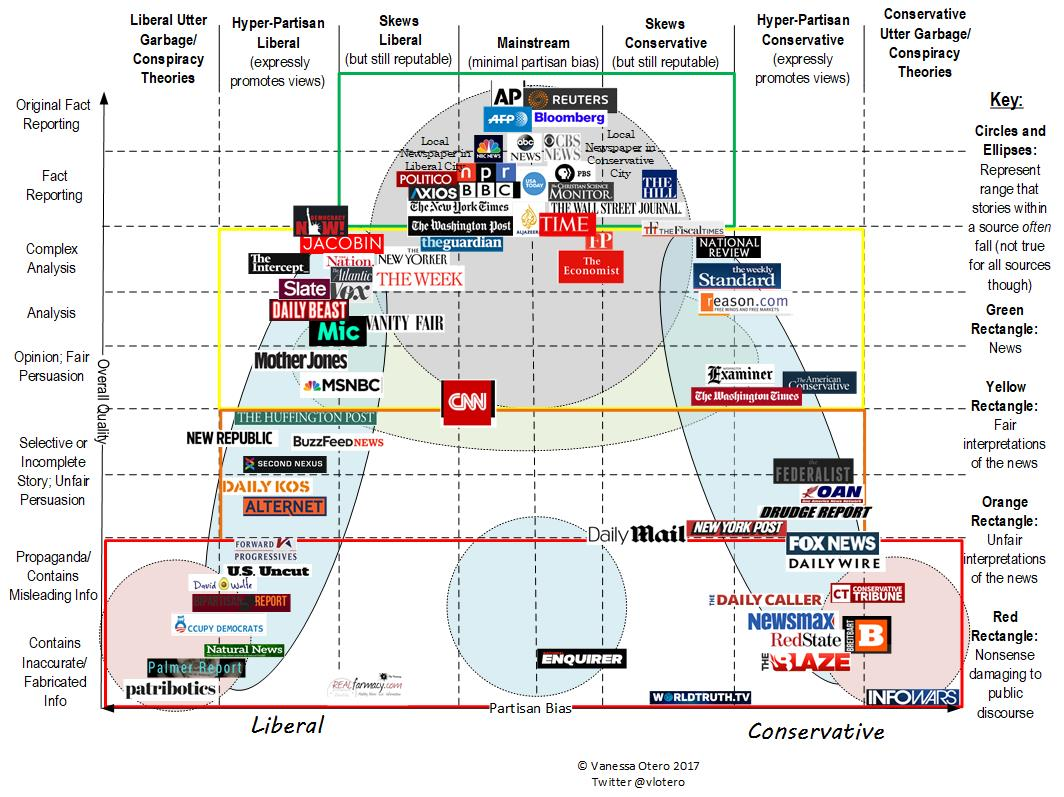
The first step is for the student to search online for “news bias chart.” Many charts like this one will come up:

Of course, even news bias charts could have bias! But the goal here is for the students just to pick one and not dwell on which one to pick–I always have to push students along here and keep focused on the purpose of the project.

Then, the student chooses a news agency from the right side of the chart and another from the left side. Whether they are choosing from the top, middle or bottom, they should choose two agencies that are at about the same latitude.

Next, from each news agency picked, the student chooses an article that covers the same topic. The topic could be about anything: a business closing, a football game outcome, a big storm, the marriage of a celebrity, the death of a famous singer, or a political candidates decision to drop out of a race. As long as the articles are specifically about the same thing, this will work!

After reading both articles, the student uses visualizations to clearly present the similarities and differences of the two articles. This can be done on a posterboard or by using a digital slideshow like PowerPoint or Keynote. The important thing is that the presentation is organized subject-by-subject or point-by-point.

Subject-by-Subject Example

I. Article Y

A. Headline information

B. Lead information

C. Who is quoted

D. What information is at the top of the article; what’s at the bottom

E. The picture(s) that was chosen

II. Article Z

A. Headline information

B. Lead information

C. Who is quoted

D. What information is at the top of the article; what’s at the bottom

E. The picture(s) that was chosen

Point-by-Point Example

I. Headline information

A. Article Y

B. Article Z

II. Lead information

A. Article Y

B. Article Z

III. Who is quoted

A. Article Y

B. Article Z

IV. What information is at the top of the article; what’s at the bottom

A. Article Y

B. Article Z

V. The picture(s) that was chosen

A. Article Y

B. Article Z

An ideal student presentation will begin with an introduction. The introduction should tell what the topic is, what the articles are, and what they agencies are. It should also make some sort of thesis statement. Finally, the student’s presentation should conclude in a way that answers, “What’s the point?” What’s the overall conclusion and takeaway here?

This presentation project can also be turned into an essay format. By considering different ways to approach writing style, we can make composition seem not-so-boring and connect it to everyday experiences.

Process Writing: IKEA Instructions

Process writing can be broken down into “Instruction” and “Process Explanation.” In this post, I explain process writing and how it is used. Then, I present an activity that involves writing out those picture-based IKEA instructions.

Instructions enable readers to perform a process. Instructions use the imperative form of verbs (also known as the command form); this form implies “you”: “(You) disconnect the system, and (you) check the electrical source.” This type of writing is found in the products you buy, showing you how to put something together or use it.

Process explanation helps the reader understand how something is carried out. Sometimes, you cannot even do the process that is explained in this type of writing.  For example, the explanation of ‘How a black hole is formed’ is not meant for the reader to follow–it’s not a set of instructions for making your own black hole! This type of writing is common in science when processes are explained.

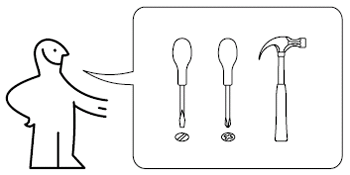
IKEA instructions are an example of process writing–but there are no words! In order to easily carry their products in many countries, the company includes instructions in picture format.

For this activity, the student must first go to the IKEA site and find a product (a bed, for example). Then, the student gets the instructions for the assembly of the product. Those instructions the student will need are in the individual product details under “Assembly & documents.”

The task is to then put the picture instructions into words. This can be a step-by-step list of instructions that are numbered:

1. Take out all the materials from the box.

2. Open the plastic bag with screws 4578.

3. Connect part 3267 with part 1490 using the screws.

4. ………

5. ……….

Since there aren’t words in the IKEA instructions, it will be a challenge! To add a twist, the student should avoid saying what the product is. When the instructions are complete, they can be presented to a parent, teacher, or class; then, the audience will need to guess what the product is based on the instructions.

Having complete instruction writing, another layer could be added next. The students challenge is to take those instructions and turn them into process explanation. In this case, the first person (I, me, we, us) and the second person (you, your) will not be used. Rather the focus goes from the person doing the action to the action being done. Heres’ an example:

To begin, all material are removed from the box. Then, the plastic bag with screws 4578 is opened. Next, part 3267 is connected with part 1490 using the screws. Once that is completed…

4D995046-F691-41D5-8661-A97968541A1A

It is important to use transition words and phrases when putting together the process explanation. Here are some examples: first, next, then, later, once that it is completed, finally.

For more ideas and guidance with writing projects, please contact Lux Writing Center. With Lux Writing Center, students receive daily personalized writing instruction online.